Empires of Mesopotamia:
Kingdom of Kish in the Early Dynastic Period
Topic: Kish in the Ur III Sumerian King List (USKL)


Empires of Mesopotamia:
Kingdom of Kish in the Early Dynastic Period
Topic: Kish in the Ur III Sumerian King List (USKL)
Introduction
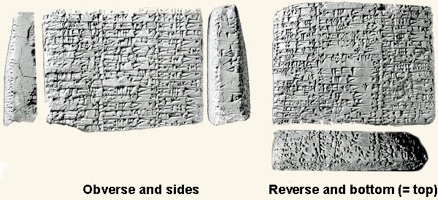
Surviving part of the tablet containing the Ur III recension of the Sumerian King List (USKL):
these images of the tablet (which is in a private collection) is adapted from CDLI: P283804
Before Piotr Steinkeller (referenced below, 2003) published the inscription on the tablet fragment illustrated above, the Sumerian King List (SKL) was known from a number of surviving fragments, all of which seem to have been produced at the court of the kings of Isin in the Old Babylonian (OB) period (ca. 1900-1600 BC). It had been been extensively studied since 1923, when Stephen Langdon (referenced below) had published the text on the so-called Weld-Blundell Prism (WB 444), which was then and is now in the Ashmolean Museum. When Thorkild Jacobsen (referenced below) published the first critical edition of the SKL in 1939, he was able to rely on WB 444 and 14 other (less complete) texts (which he listed at pp. 5-13). The corpus of surviving OB recensions now contains 24 mostly fragmentary texts (although W-B 444 remains the most complete surviving version). However, the recension that Steinkeller published is unique in that, as we shall see, the scribe who compiled it dedicated it to his king, Shulgi, the second ruler of what we know as the Ur III dynasty (ca. 2100-2000 BC). In order to differentiate it from the other, ‘younger’ recensions, it is usually referred to as the USKL.
The OB recensions of the SKL are conveniently accessible as a composite at CDLI: P479895. Piotr Steinkeller (as above) provided:
✴a transliteration of the surviving text of the USKL; and
✴an initial commentary that remains fundamental.
A transliteration of the text and photographs are available on line at CDLI: P283804. Steinkeller’s publication of the USKL paved the way for a much deeper understanding of the processes by which these important (but perplexing) king lists had evolved in the late 3rd millennium BC and, importantly, Gösta Gabriel (referenced below, forthcoming) is about to publish a critical edition of all the known recensions (including the USKL), together with a detailed analysis of this process of textual evolution.
USKL Text
The surviving USKL text was inscribed on part of a clay tablet of unknown provenience, which was (as it still is) in a private collection. It is arranged in three columns on each side of this tablet fragment (with that on the reverse sometimes continuing onto the bottom). About half of the original text is missing but, since the opening and closing lines survive, we know that:
✴it begins (at obverse, col. 1, line 1) with the claim that:
“After kingship was brought down from heaven, Kish was king. In Kish, Gushur ruled for 2,160 years”, (see the translations by Gianni Marchesi, referenced below, 2010, at p. 231 and Gösta Gabriel, 2023, referenced below, at p. 247); and
✴it ends with:
•the name of Ur-Namma, the founder of the ‘Ur III’ dynasty, who had reigned for 18 years (reverse, col. 3, lines 21-2); and
•the scribe’s dedication of his handiwork to the divine Shulgi, his king (who was Ur-Namma’s son and successor).
Steinkeller argued that, since Shulgi was given a divine determinative here, this text must have been compiled at some time between:
•his 20th regnal year (the approximate date of his deification); and
•his 48th regnal year (the approximate date of his death).
In other words, the USKL was compiled in ca. 2074-2047 BC and thus pre-dates any other known recension by more than 150 years.
Kings of Kish in the USKL
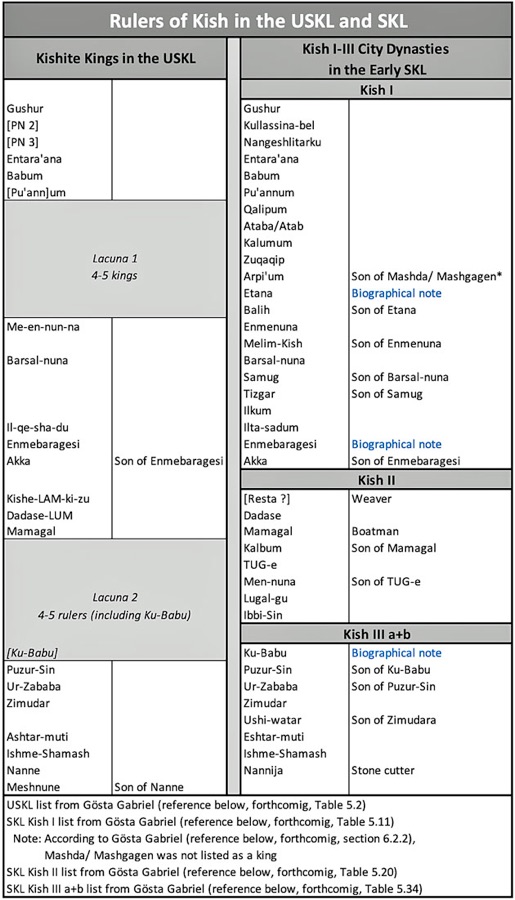
Table 1: Kings of Kish in the USKL and the SKL
In the SKL, the kings of Kish were each assigned to one of three or four dynasties that were separated by lists of rulers from other cities (as in the right-hand column in Table 1 above). Piotr Steinkeller (as above) established (at p. 274) that:
✴almost all of the 21 king listed on the obverse of the surviving USKL tablet could be identified as kings of Kish in the SKL; and
✴the original USKL list must have begun with an unbroken list of about 30 Kishite kings from Gushur to Meshnune, the son of Nanne.
In other words, in the period between the compilation of the USKL and that of the earliest known SKL recensions, this originally unbroken list had been ‘punctuated’ at two and then three points by the inclusion of other ‘city dynasties’. Furthermore, as Steinkeller pointed out (also at p. 274):
✴Meshnune, son of Nanne, had been excluded from the SKL; and
✴he had probably been the last Kishite king in the USKL list, since:
“... no more rulers of Kish are listed in the SKL,”
As it happens, the entire obverse surface of the surviving USKL tablet is used for the surviving Kishite records, arranged in three columns (with Gushur the first name in column 1 and Meshnune the last name in column 3).
Steinkeller further argued (at p. 282) that, although the USKL recension was almost certainly ‘published’ by Shulgi, the possibility that he was the ‘sponsor’ of the Kishite part of the list:
“... appears to be out of the question, since it is inconceivable that Shulgi (or, for that matter, his father and predecessor Ur-Namma) would have had any part in a project that assigns much of the past glory to Kish ...”
He further argued that the precursor of the USKL must have been commissioned by Sargon himself or by a member of his Akkadian dynasty. In my view, this over-states the argument: if the past glory of Kish was so inimical to Shulgi, why did he include this long list of Kishite rulers at all? However, Gösta Gabriel (referenced below, 2023, at p. 244) is surely correct in asserting that, whatever the route by which this list reached Shulgi’s court (and he, accepted Steinkeller’s argument that the precursor came from Akkad) these putative Akkadian scribes had probably started by copying:
“... an existing list of rulers, and so continued the Kishite historiographical tradition, including the celestial origin of the city’s power and its extremely long first reign. Accordingly, the first recension of what would become the [USKL and then the SKL] was most likely written in Kish [itself] before ca. 2350 BC.”
The point here is that, while Shulgi’s scribe probably did largely rely for this part of his king list on a much earlier list that had originated at Kish, there is no reason to believe that he felt constrained to leave this putative list written at Kish untouched.
As is clear from Table 1, the scribes at the Isin court made a number of further changes to the USKL, For example, not only did they split the USKL Kishite list into 3 (and subsequently 4) parts and delete Meshnune: they also (inter alia) added a number of new names and:
✴in relation to the amount of information given:
•in the USKL, this was restricted to each ruler’s name and the length of his (or, in one case, her) reign; while
•in the SKL, short biographical notes were added in some case; and
✴in relation to naming conventions:
•in the USKL, only one Kishite king apart from Meshnune was given a patronymic (Akka, son of Enmebaragesi); while
•many more patronymics were given in the SKL.
In both of these cases, the changes made in the SKL applied to some rulers who had been listed in the USKL and some who had subsequently been added to it.
Enmebaragesi and Akka in the USKL
Enmebaragesi
As it happens, Enmebaragesi is the only king listed in the surviving part of the USKL between Gushur and Ku-Babu who is arguably ‘historical’ (albeit that the 600 year reign that he is given in that list clearly is not): as discussed in the main page (see the link at the bottom of this page), he is almost certainly recorded (as ‘Mebaragesi, king of Kish’) in an inscription of on a fragment of a large stone (alabaster) bowl of unknown provenience (RIME 1:7:22:2; CDLI, P431027), was apparently] ‘confiscated at Kut’, (some 160 km south of Baghdad) and is now in the Iraq Museum (IM 30590).
Enmebaragesi also featured prominently in Sumerian literary tradition at the time of Shulgi. For example, we read in a praise poem of Shulgi known as ‘Hymn O’ that:
“Shulgi, the good shepherd of Sumer, praised his brother and friend, lord Gilgamesh [with these words] ... :
‘Mighty in battle, destroyer of cities, smiting them in combat.
You, [Gilgamesh], drew your weapons against the house of Kish.
You captured [the bodies of ?] its seven heroes.
You trampled underfoot the head of the king of Kish, Enmebaragesi.
You brought the kingship from Kish to Uruk", (lines 49-60, see also the translation by Ludek Vacin, referenced below, at p. 224).
As Vacin observed, these lines are redolent of the ‘transfer of kingship’ formulae used in the SKL (including at least the later part of the USKL). Thus, it is tempting to conclude that Enmebaragesi was added to the USKL list by Shulgi’s scribes.
Akka
Unlike his putative father, Akka is not known from surviving royal inscriptions. He is, however, known from the Sumerian poem ‘Gilgamesh and Akka’ (see the translation by Andrew George, referenced below, at pp. 100-4). George observed (at p. 99) that:
“This ... is the shortest of the [five known] Sumerian tales of Gilgamesh and also the best preserved. ... It differs from the other four ... in having no obvious counterpart in the Akkadian [‘Epic of Gilgamesh’].”
As he also noted (at p. xxi), these five Sumerian poems:
“... were probably first committed to writing under the [Ur III dynasty], whose kings felt a special bond with Gilgamesh as a legendary hero whom they considered their predecessor and ancestor. ... The texts that we have, although known almost entirely from ... copies [of the 18th century BC], are very probably directly descended from master copies ... [that King Shulgi placed] in his Tablet Houses. ... Even so, it is entirely possible that the poems stem ultimately from an older, oral tradition.”
We read in ‘Gilgamesh and Akka’ that:
✴when envoys of Akka, the son of Enmebaragesi, came from Kish to make unspecified demands on Uruk, Gilgamesh persuaded the Urukeans to fight rather than to submit (lines 1-47);
✴Akka laid siege to Uruk (49-82); and
✴when Gilgamesh appeared on the walls of Uruk in all his glory:
•the army of Uruk emerged from the city and defeated the terrified Kishites; and
•Gilgamesh took Akka prisoner (lines 83-99).
So far, so predictable. However, the ending to the story is rather unexpected:
✴Gilgamesh recognised the captive Akka as his overlord and acknowledged an earlier occasion on which Akka had saved his life by helping him to flee from an unidentified danger (see lines 100-6);
✴Akka transferred Uruk to the charge of Gilgamesh, but asked him to repay his debt of honour (lines 107-10); and
✴Gilgamesh duly redeemed this ‘debt’ by freeing Akka and allowing him to return to Kish (line 1113).
Enmebaragesi and Akka in Sumerian Literary Tradition
As Dina Katz (referenced below, at p. 14) observed, there are thus two Sumerian literary traditions relating to a war between Kish and Uruk at the time of Gilgamesh:
✴in Shulgi’s ‘Hymn O’ (see above), Gilgamesh defeated Enmebaragesi; while
✴in the Sumerian poem ‘Gilgamesh and Akka’, Gilgamesh defeated Akka, the son of Enmebaragesi.
As she observed, this:
“... raises the question of whether:
✴[there was a single Sumerian tradition in which] Gilgamesh fought [two wars against Kish, one against Enmebaragesi and the other against Akka]: or
✴we are dealing with two different traditions about one and the same war.”
She discounted the first of these propositions, primarily because the internal evidence from the poem implies that, prior to Gilgamesh’s victory over Akka, Uruk was subject to Kish. Furthermore, she found direct support for the second proposition from the fact that ‘Hymn O’ actually reflects two of the five Sumerian poems:
✴‘Gilgamesh and Akka’; and
✴‘Gilgamesh and Huwawa’ (see the fragmentary line 95):
as she pointed out (at p. 15), the appearance of at least two independent Sumerian traditions relating to Gilgamesh in ‘Hymn O’:
“... indicates that these tales ... were already in existence in Shulgi's time, although perhaps only as an oral traditions.”
In other words, the surviving evidence arguably suggests that:
✴in early Sumerian tradition, Gilgamesh rescued Uruk from the hegemony of Kish by defeating Akka; and
✴the author of ‘Hymn O’decided to elaborate this tradition by replacing Akka by Enmebaragesi.
In addressing the likely reason for this putative substitution of Enmebaragesi for Akka, Katz observed (at p. 15) that:
“The reputable king of Kish was Enmebaragesi, as is evident from ... :
✴the [biographical] note added to his name in the SKL; and
✴his place as the first builder of Enlil's temple [at Nippur] in the ‘[Tummal Chronicle’].”
Both sources are later than [‘Hymn O’], and testify to Enmebaragesi's image as it was handed down to the Old Babylonian period. His son Akka is mentioned in these sources, but only as his successor and without special reference.”
She then argued that:
“In historical perspective, the defeat of Akka would be less impressive than the defeat of his prestigious father, who therefore:
✴served the purpose of [‘Hymn O’] far better ; and
✴added to the quality of Gilgamesh's victory over Kish.
Since Enmebaragesi's name was deliberately inserted to replace Akka's, the hymn does not reflect a separate tradition: the tale and the hymn are variants of one literary tradition.”
Akka, Son of Enmebaragesi in the USKL
As discussed above, Akka appears in the USKL as the son and successor of Enmebaragesi. Importantly, if we set aside Meshnune, son of Nanne, (both of whom were probably added to the original list in error - see below) then Akka is the only one of the 19 Kishite kings listed in the surviving part of this list who is given a patronymic.
As also discussed above:
✴Akka, son of Enmebaragesi, also appears in Sumerian poem ‘Gilgamesh and Akka’, in which he was driven from the walls of Uruk by the Urukean hero Gilgamesh but allowed to return to Kish; but
✴Dina Katz (who was writing before the publication of the USKL) reasonably suggested that, in ‘Hymn O’ (in which Shulgi praised his ‘brother and friend’, the Urukean hero Gilgamesh), he (Shulgi) replaced Akka by the more prestigious (and historically attested) Enmebaragesi.
On this basis, we should extend this hypothesis as follows:
✴in the original Sumerian tradition, Gilgamesh liberated Uruk from the hegemony of Akka, king of Kish; and
✴at the time of Shulgi:
•this original tradition formed the basis of the poem that we know as ‘Gilgamesh and Akka’, with Akka named (perhaps for the first time) as the son of Enmebaragesi);
•‘Hymn O’ was written, with Enmebaragesi replacing Akka as the king who was defeated by Gilgamesh; and
•both Enmebaragesi and Akka were added (as father and son) to the original list of Kishite kings in the USKL.
Thus, we have a plausible hypothesis in which ‘King Akka of Kish’ was a purely literary figure to whom Shulgi gave ‘quasi-historic’ status by:
✴having (the probably legendary) Gilgamesh (Shulgi’s own ‘brother and friend’) defeat the historical Enmebaragesi rather than the legendary Akka; and
✴‘nodding’ to tradition by adding ‘Akka, son of Enmebaragesi’ to the USKL list of kings of Kish.
However, we cannot rule out the possibility that Shulgi had epigraphic evidence in which ‘Akka, son of Enmebaragesi’ actually was named as a king of Kish.
The Problem of Meshnune, the son of Nanne
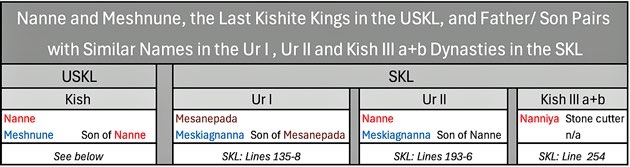
Table 2: Father/son pairs with similar names in the USKL and the SKL
(See Gösta Gabriel, referenced below, forthcoming, Chapter 6.2.21.5 and Table 6.50 for
a more detailed analysis of the possible transmission of these names between recensions)
Unfortunately, there is a lacuna in the surviving USKL text after the records for Nanne and Meshnune. However, in the SKL:
✴Meshnune is not recorded; and
✴Nanne is transmitted as Nanniya, the stone cutter, who reigned for 7 years before:
“Kish was struck down with weapons [and] the kingship was carried away to Uruk, [where] Lugalzagesi was king”, (CDLI: P479895, lines 254-60).
For this reason, Piotr Steinkeller (referenced below, 2003, at p. 274) reasonably argued that Meshnune must have been the last Kishite king in the USKL since:
“...no more rulers of Kish are listed in the SKL [after Nanne/ Nanniya].”
Of course, this leaves the question of why Meshnune is one of very few Kishite kings in the the USKL who was not recorded in any of the known SKL recensions (see below).
There is another surprising thing about Meshnune: he is one of only two Kishite kings among the 21 recorded in the surviving USKL text who is given a patronymic (the other being Akka, son of Enmebaragesi - see below). Interestingly, according to Gösta Gabriel (referenced below, forthcoming, Chapter 6.2.21.3 and Table 6.48), 7 of the 8 Kishite kings known to have been added to the USKL list in the SKL (marked by horizontal arrows in the table) were designated as the son of the king listed above them. On this basis, we might reasonable argue that:
✴the putative original Kishite king list eschewed patronymics; and
✴both Meshnune and Akka (discussed below) were additions to this list (probably, but not necessarily, inserted by Shulgi’s scribe).
Piotr Steinkeller (referenced below, 2003, at p. 278) offered a possible explanation for Meshnune’s appearance in the USKL and his later deletion from the SKL, starting with the observation that:
“The pair [Nanne and Meshnune, son of Nanne] appears to have been given a double (or perhaps a treble) life in the SKL ...:
✴[they] almost certainly also ended up as the first two rulers of Ur II ...; and
✴it may further be speculated that they are also identical to [the first two rulers of Ur I]”, (see Table 3 above).
This prompted him to ask, rhetorically:
“Is it possible, therefore, that Nanne and Meshnune are, in fact Mesanepada and Meskiagnuna of Ur, whom the USKL classified as Kishite rulers because Mesanepada held the title [king of Kish]? If so, SKL’s decision to reclassify them as the rulers of Ur would be fully justified.”
In other words, perhaps:
✴Nanne/ Nannya was an abbreviation of Mesanepada, a historical king of Ur who is known from a surviving inscription ((RIME 1.13.5.2, P431204) to have also claimed the title king of Kish; and
✴Meshnune was an abbreviation of Meskiagnanna.
Gösta Gabriel (referenced below, forthcoming, see, for example, Table 6.50) presented a more detailed analysis in which (in all but one of the Old Babylonian recensions, which he labelled XP:1):
✴Nanne of the USKL reappeared as the Ur II king of that name (see line 193); and
✴Meshnune of the USKL reappeared as:
•Meskiagnanna, son of Mesanepada in the Ur I king list (see lines 137-8); and
•Meskiagnanna, son of Nanne in the Ur II king list (see line 196).
This supports the suggestion above, at least in the case of Meshnune, he was indeed probably added to an original list of Kishite kings, erroneously as it turned out, by Shulgi’s scribe.
Kish in the USKL: Conclusions
At the end of his paper on the ‘Prisoner Plaque’, Piotr Steinkeller (referenced below, 2013, at p. 151) mused on the problem of the historicity of the SKL (and, by implication, of the USKL). As he observed:
“Particularly puzzling here is the nearly total disjunct between the names of Kishite kings recorded in the list and those surviving in the [surviving] historical records.
✴Of all the Kishite kings named in the list, only one, Enmebaragesi [discussed below] is documented independently.
✴On the other hand, there are several northern bearers of the title who do not appear in the list. The most conspicuous among them is Mesilim, whose dedicatory inscriptions survived at Adab and Girsu [see below]. Given the fact that these and other inscriptions that he had left behind were well known to the ancients, omission from the list is simply astonishing.
This raises a question as to the nature information that was used (in Sargonic times, or was it in the Ur III period ??) by the original compilers of the list with regard to the kings of Kish. I, for one, can offer no confident explanations and only note them as a problem.”
I wonder whether we might simplify this problem to some extent by splitting the surviving Kishite list in the USKL into two parts:
✴Gushur to Dadase, all of whom had unbelievably long reigns (implying that they originated in the world of mythology); and
✴Ku-Babu to Ishme-Shamash, who (if we allow Ku-Babu the luxury of a 100 year reign) are all at least potentially historical figures.
More specifically, we might hypothesise that:
✴the ‘mythological’ part of the USKL Kishite king list evolved on the basis of what Gösta Gabriel dubbed:
“... the first recension of what would become the [USKL and then the SKL] was most likely written in Kish before ca. 2350 BC; and
✴the ‘quasi-historical’ part of the USKL Kishite king list evolved from Gabriel’s putative Akkadian recension, which was probably written at the behest of Sargon or one of his dynastic successors.
In that case, we can suggest a partial answer to Steinkeller’s specific question as follows: perhaps this ‘disjunct’ between:
✴the Kishite kings listed in the USKL; and
✴those who are recorded in our surviving ‘historical’ sources;
arises because there were arguably three distinct sources for the former:
✴a list of early Kishite kings from Gushur to Dadase that was mostly taken from Kishite mythological tradition;
✴additions to this list that were made by Shulgi’s scribe in an effort to include what he regarded as ‘historical’ figures:
•Enmbaragesi and his son, Akka; and
•Nanne and his son Meshnune; and
✴a quasi-historical or at least traditional list of Kishite rulers from Ku-Babu to Ishme-Shamash.
Perhaps the most important question in the present context is why Shulgi based his case for the legitimacy of his rule as ‘mighty man, king of Ur, king of the lands of Sumer and Akkad’ in part on their ‘descent’ from the mythical kings of Kish. The cultural/religious context in which this claim was made is probably beyond modern comprehension. However, we can certainly use the surviving USKL text from Gushur to Ku-Babu as evidence that the prestige of the kingship of Kish survived long after Kish itself had descended into political oblivion. However, the prestige that is evident in this source is based simply on the ‘fact’ that, as stated in the opening lines, when kingship descended from heaven, it descended on Kish.
Steinkeller, p. 282:
“... only one possible agency for whom the USKL’s vision of history ... would have been an acceptable one: ... [the kings of the Akkadian dynasty would] have had an obvious interest in promoting the idea that Kish remained the seat of kingship from time immemorial down to Sargon’s own day.”
In other words, Shulgi’s scribe probably extended and elaborated a list that had been compiled for a king of Akkad. Gösta Gabriel (referenced below, 2023) provided further support for this hypothesis and then argued (at p. 244) that:
“It is unlikely that the historical Old Akkadian rulers invented the long list of Kishite kings [themselves]. It is much more probable that they copied an existing list of rulers and so continued the Kishite historiographical tradition, including the celestial origin of the city’s power and its extremely long first reign. Accordingly, the first recension of what would become the [USKL and then the SKL] was most likely written in Kish before ca. 2350 BC.”
References
Gabriel G. I., "Die ‚Sumerische Königsliste’ als Werk der Geschichte: Kritische Editionsowie text-, stoff- und konzepthistorische Analyse”, (forthcoming: I would like to express my gratitude to Dr Gabriel for allowing me to read a pre-publication copy of this much-needed book)
Gabriel, G. I.,"The ‘Prehistory’ of the Sumerian King List and Its Narrative Residue", in:
Konstantopoulos G. and Helle S., “The Shape of Stories”, (2023) Leiden and Boston, at pp. 234-57
George A. R., “Epic of Gilgamesh”, (2020, 2nd edition) London
Steinkeller P., “An Archaic “Prisoner Plaque” from Kiš”, Revue d'Assyriologie et d'Archéologie Orientale, 107 (2013) 131-57
Vacin L., “Šulgi of Ur: Life, Deeds, Ideology and Legacy of a Mesopotamian Ruler As Reflected Primarily in Literary Texts”, (2011), thesis of the School of Oriental and African Studies (University of London)
Marchesi G., “The Sumerian King List and the Early History of Mesopotamia”, in:
Biga M. G. and Liverani M. (editors.), “Ana Turri Gimilli: Studi Dedicati al Padre Werner R. Mayer da Amici e Allievi”, (2010) Rome, at pp 231-48
Steinkeller P., “An Ur III Manuscript of the Sumerian King List”, in:
Sallaberger W. et al. (editors), “Literatur, Politik und Recht in Mesopotamien: Festschrift fur Claus Wilcke”, (2003) Wiesbaden, at pp. 267-292
Katz D., “Gilgamesh and Akka”, 1 (1993) Groningen
Jacobsen T., “The Sumerian King List”, (1939) Chicago IL
Langdon S. H., “The H. Weld-Blundell Collection in the Ashmolean Museum: Vol. II: Historical Inscriptions, Containing Principally the Chronological Prism (WB. 444)”, (1923) London
Topic: Kish in the Ur III Sumerian King List (USKL)
Main Page: Kingdom of Kish in the Early Dynastic Period