

Three nunneries of Spello have their own pages in this website:
-
✴Santa Maria di Vallegloria (including Santa Maria di Vallegloria Vecchia); and
Monastero della Povera Vita (15th century)
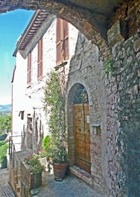
In 1571, the Apostolic Visitor found the house too small for its 22 inhabitants and banned new entries. Its subsequent decline was rapid, and the last sister died in 1628. Its property passed to the Seminario San Felice.
Since 1970, the building has housed the Casa della Povera Gente, which was established here by a Parisian, Maddalena Löwit (known as Maddalena di Spello).
Santa Chiara (13th century)
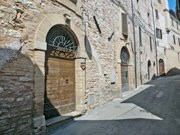
This nuns of this nunnery in Via Giulia formally followed the Benedictine Rule, although they actually lived as Franciscan Tertiaries. The oldest surviving documentary reference to it is relatively late, dating to 1350. The nuns of SS Giacomo e Margherita (see below) moved here in 1464. The merged community was suppressed in 1781, and the complex passed to the Ursuline Congregation. This foundation closed in 1822.
Immaculate Virgin with saints (ca. 1700)

SS Giacomo e Margherita (1258-9)
The Benedictine nunnery of SS Giacomo e Margherita (also known as the Monastero di Vallingegno) was constructed shortly after Pope Alexander IV had prohibited the building of new nunneries in Spello because this would prejudice the Poor Clares of Santa Maria Vallegloria. The bishop of Nocera Umbra failed to follow his order to demolish the new foundation, and Pope Urban IV took it under papal protection in 1263.
The hermits of Santa Maria del Paradiso (below) moved here in 1325.
SS Giacomo e Margherita was enclosed by the new town walls in 1360.
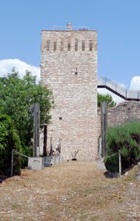
Santa Maria del Paradiso (1296)
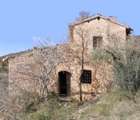
The nunnery was later adapted as a farm but is now abandoned.